
Monday, March 6, 2017

Friday, January 20, 2017
Writing Poetry: "I Am From" Poems

Introduction to 'I Am From' Poems This school year we have read and analyzed the poems of others. Now it's time to write our own. Since this will be one of the first attempts for some of us at writing poetry, I thought it would be a good idea for us all to use a similar format that is scaffolded and accessible. Today we will begin writing "I Am From" poems.
A poem by George Ella Lyon called "Where I’m From" is the inspiration for this activity. In her poem Lyon uses descriptive language and sensory details to tell the story of the everyday things, people, and places that together tell the story of where she comes from. You can read her poem here and watch the video version below.
The poem lends itself to imitation and many have tried, including students. Check out some of the student examples below.
 |
| By Evelyn from Lakeview Middle School |

Writing Your Own "I Am From" Poem Now it's your turn to write a poem that illustrates where you are from. The "I Am From" Poem template can be found in your Language Arts Google Classroom. If you're having trouble getting started and would like an opportunity to brainstorm ideas before drafting your poem, try using the "I Am From" Pre-Write document, which can also be found in your Language Arts Google Classroom.
As you move forward in the writing process and begin to improve and revise your poem, consider adding more sensory details. A handy list of sensory details can be found here.
Wednesday, January 18, 2017
Poetry: "Oranges" and Sensory Details
 |
| The poem "Oranges" is featured in the book of poetry Fire in My Hands By Gary Soto |
Today's Learning Objectives To understand and appreciate poetry and to recognize imagery and its effects.
"Oranges" by Gary Soto: Noting Sensory Details Today we will read the poem "Oranges" by Gary Soto, which is rich with imagery and sensory details. Remember that writers use sensory details to appeal to a reader's senses -- sight, hearing, touch, smell, and taste. These details can help the reader visualize the scene the writer is describing and create images that evoke feelings within the reader.
As we read "Oranges" take note of Gary Soto's use of sensory details using the document "Oranges" - Sensory Details, which can be found in your Language Arts Google Classroom.

Wednesday, December 14, 2016
Writing a Theme Analysis of 'Any Small Goodness'

Writing a Theme Analysis of Any Small Goodness We have finished the novel, chosen a theme statement, and gathered evidence that supports our selected theme. Now it's time to write a paragraph in which we analyze theme.
Here are a few guidelines for the paragraph:

You will write your theme analysis using the document 'Any Small Goodness' Theme Analysis Paragraph, which you can find in your Language Arts Google Classroom. Make sure to use your Any Small Goodness - Theme Analysis Pre-Writing, other related Any Small Goodness documents, and of course the Any Small Goodness book itself, to support you in the writing of your paragraph. This assignment will be due Wednesday, December 21.
Tuesday, December 13, 2016
Analyzing Theme in 'Any Small Goodness'
 |
| Today you will analyze the theme of Any Small Goodness. |
Today's Focus Question How can we determine the theme or a central idea of a text through an examination of a story's characters?
Analyzing Theme in Any Small Goodness We may have finished reading the novel Any Small Goodness, but our work with the text is not yet done. Today we will begin analyzing the theme of the novel, which will prepare us to write a final paragraph in which we identify its theme and provide evidence and analysis to support our understanding.
As you know the theme of a story is its big idea. It’s a message, lesson, or universal truth that goes beyond the literal events of the story. In other words, it’s an idea that applies to people in general—not just the characters in the story. An author doesn’t usually come right out and tell you what the theme is; as a reader, you need to infer it. A story can have more than one theme.
As we've read the novel, we have thought about some possible themes for Any Small Goodness. I have consolidated the best of those ideas into a menu of themes that you will be able to choose from. Your first task is to examine the list of potential themes for Any Small Goodness below and select the one that you would like to write about.

Today you will use the document Any Small Goodness - Theme Analysis Pre-Writing, which can be found in your Language Arts Google Classroom to organize your evidence and analysis. Over the next several days, you will use this pre-writing work to craft an organized paragraph in which you formally analyze one of the themes of Any Small Goodness.
Homework (1.) Read for at least 30 minutes at home each school night. (2.) Continue working on your Any Small Goodness - Theme Analysis Pre-Writing.
Monday, December 12, 2016
The Good and the Holy in 'Any Small Goodness'
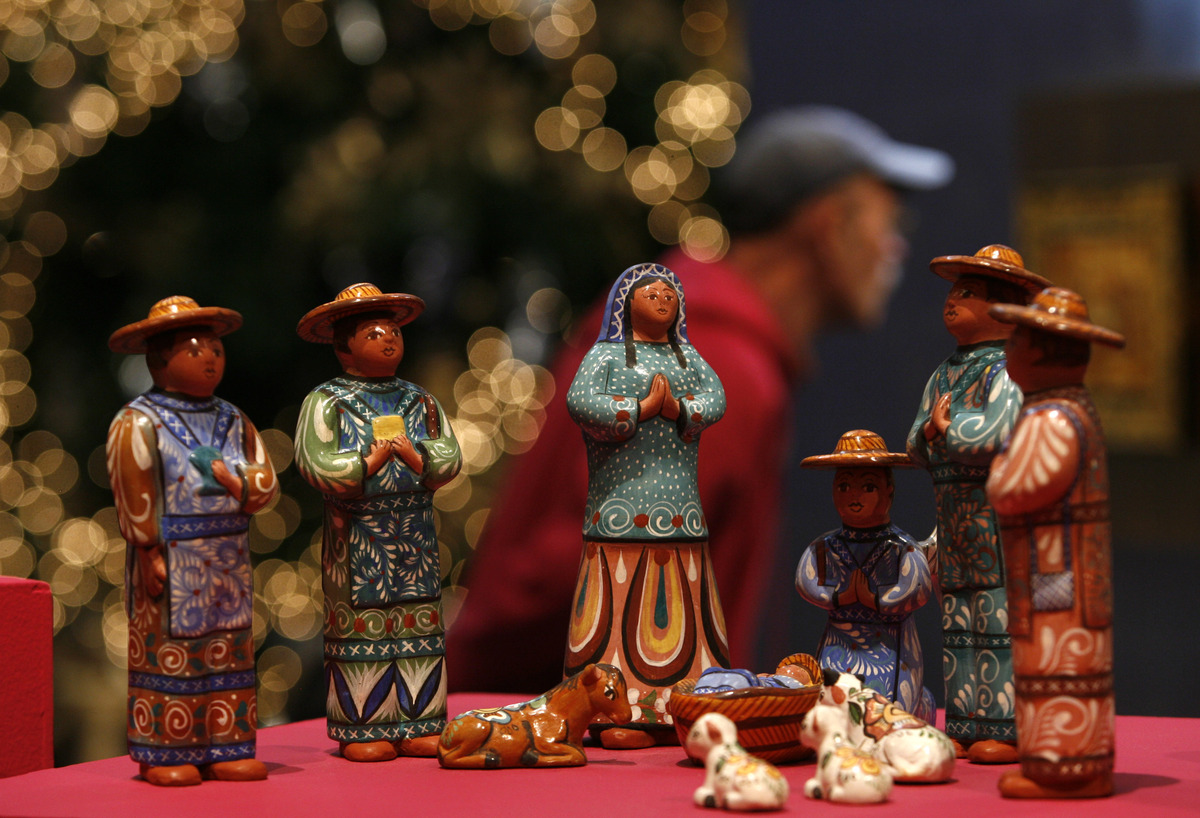 |
| It's Nochebuena, the night before Christmas, and Any Small Goodness is coming to a close. |
Today's Focus Question How can we determine the theme or a central idea of a text through an examination of a story's characters?
Reflecting on "Green Needle Gang" Before we begin today's reading let's briefly revisit the chapter "The Green Needle Gang" of Any Small Goodness. Look over the assignment Any Small Goodness - The Green Needle Gang (Ch. 8). Do you think Arturo has been listening to his father? Give details to support your answer.
Now let's take another look at the document Any Small Goodness - Prepare to Read and Character Map. Who is the character from the chapter "The Green Needle Gang" who is the most influential? What lesson does this character teach us? Might this lesson be a part of the puzzle to ultimately determining the theme of the entire novel?
Guided Reading of Any Small Goodness: "Christmas Presents" Today we conclude our reading of Any Small Goodness by reading the final chapter "Christmas Presents" together. As we read we will stop periodically to discuss and analyze the text. You will also be using the document Any Small Goodness - Christmas Presents (Ch. 9), which is located in your Language Arts Google Classroom, to reflect on and respond to this chapter.
Homework (1.) Read for at least 30 minutes at home each school night. (2.) Complete the assignment Any Small Goodness - Christmas Presents (Ch.9), which is due Friday, December 16.
Friday, December 9, 2016
Happy Friday!

Flocabulary Vocabulary Welcome to Unit 6 of Flocabulary's vocabulary program! This week's lesson "The Parade" features a new set of words to interact with, learn, and hopefully begin to incorporate into our own vocabulary. This week's words are:
anticipate / apparel / controversy / deluge / designate / equivalent / hostile / ingenious / jovial / makeshift / salvage / significant / terrain / unruly / vacate
After watching and interacting with the video and song a couple of times, study the words and their meanings with the PDF document Vocabulary - Unit 6 (The Parade), which can be found in your Language Arts Google Classroom. We will be having a quiz on these words next Thursday, December 15.
Library Visit Today we head to the library. Make sure you bring your books to either return or renew and your student ID card if you want to check out books. You may look for new books, read quietly, or take AR tests. Please take advantage of this opportunity and use your library time well. Time is running out this quarter to earn AR points towards your reading goal!
Subscribe to:
Posts (Atom)