District Benchmark Test Good morning! It's time to take the District Benchmark Test. I will provide each of you with a test booklet, an answer sheet, and a pencil (if you need one). This exam covers material that we have studied in class this year, so, yes, this test will count towards your Language Arts grade. Take a deep breath, read questions and passages carefully, and do your best! If you finish early, you may silent read until all of your classmates have also completed the exam. Good luck! Homework 30 minutes of silent reading at home. Make sure to record your reading on one of the digital reading logs available. Our weekly Google Form reading log is here and the Google Spreadsheet reading log can be found here.
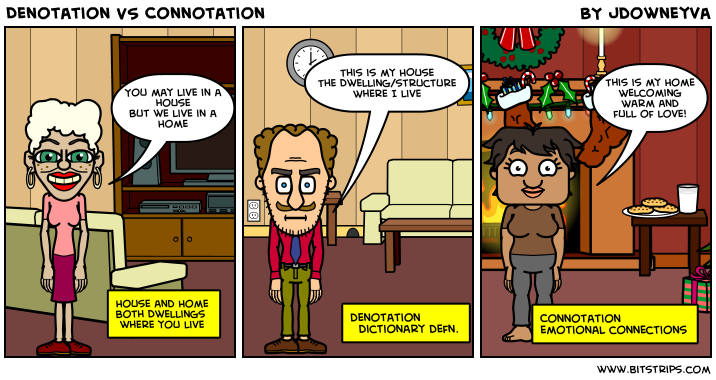
Warm Up Good morning! Let's get the day started with a little typing practice. Open up your Typing Club app and get started! When you hear the alarm, please end your typing session and return to the Language Arts Blog. Vocabulary: Understanding Denotation and Connotation The English language is filled with words that at first glance appear to be very similar to each other. However, when we look closer at the context these words are used in, differences in meaning become a lot more apparent. Don't believe me? Check out the video below.
Words have shades of meaning. In addition to a literal definition, otherwise known as denotation, words also have what we call a connotation. Connotation includes the emotions, feelings, and images associated with a word. Learn more by watching the video below.
Now that you understand that words can have similar denotations while also having very different connotations, let's put your understanding to the test. You can find a list of words herethat are similar to each other with regards to definition (denotation) yet have very different feelings (connotations) associated with them. Use the assignment here to match the words from the word list with similar denotations. Next, sort the pair of words by which has a more positive connotation and which is more negative.
Homework (1.) 30 minutes of silent reading at home. Make sure to record your reading on one of the digital reading logs available. Our weekly Google Form reading log is here and the Google Spreadsheet reading log can be found here. (2.) Complete your 'Connotation Chart' assignment.
Coming Up: Apostrophes Re-Take Quiz Some students have privately expressed their disappointment with their grade on last week's NoRedInk 'Apostrophes' Quiz. I hear your cries for mercy and therefore will be offering a one-time 'Apostrophes' retake quiz this week. If you were disappointed with your score and its impact on your overall Language Arts grade, come to my class on Thursday, April 10 at lunch and take a new version of the same test again. Whichever quiz grade is the highest will be the one entered in School Loop. In the meantime, you are welcome to go on NoRedInk and do the various apostrophe practice activities. I hope you take advantage of this offer. Good luck!
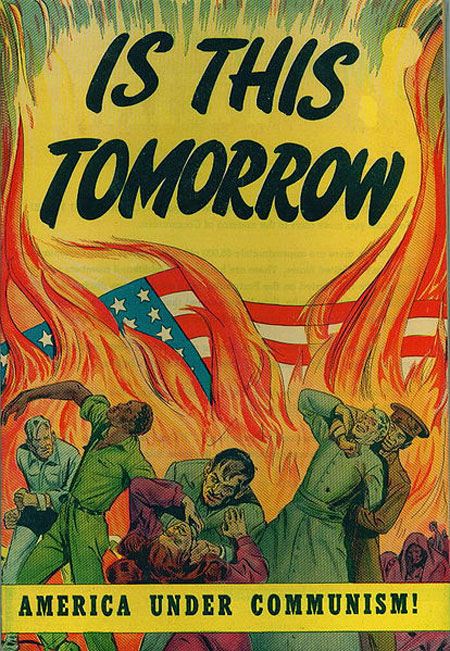
Warm Up: Silent Reading and Digital Reading Log Happy Monday! In order to keep you from becoming complete tech zombies, we will spend some time away from our Chromebooks today. When you hear the alarm, close your Chromebooks and began Silent Reading using actual books with pages made from real paper. When you hear the alarm again, you may open your Chromebook and make a reading entry using our digital reading log here. Introducing Propaganda Propaganda is a means of communication that people use in order to try to get people to buy into or believe in a particular cause or position. The ideas or statements used in propaganda are often false or exaggerated and intended to influence people. Read more what propaganda is, it's history, and the various types about the history and types of propaganda here. Check out the images below. Why do you think they are considered examples of propaganda? (Warning: Some images are disturbing and offensive.)
Now that you have a basic understanding of what propaganda is, head on over to EDpuzzle and interact with a video about the topic as it relates to advertising. If you haven't linked your EDpuzzle account with your Language Arts class, here's the class code: Class code: bWPL3Eb. WaWPL3E
Homework (1.) 30 minutes of silent reading at home. Make sure to record your reading on one of the digital reading logs available. Our weekly Google Form reading log is here and the Google Spreadsheet reading log can be found here. (2.) Complete the 'Propaganda' EDpuzzle video and questions.
Warm Up: NoRedInk Apostrophes Quiz Happy Friday! I expect you to be on your best behavior for the substitute teacher today. It's time to take your 'Apostrophe Quiz.' Head on over to NoRedInk and find the assignment of the same name and begin. Make sure to keep your eyes on your own screen during the quiz. If you fix your mistakes you will receive extra credit. Once you finish, you may begin putting the finishing touches on your Argument Essay. Writing an Argument Essay: The Final Class Day After two weeks of work, this is it. This is your last class day to work on your Argument Essay. Please take full advantage of the time you have. Refer back to previous blog entries for helpful hints and links to resource materials. If you don't finish in class today, please use the weekend to finish your essay. It's due Monday! Homework (1.) 30 minutes of silent reading at home. Make sure to record your reading on one of the digital reading logs available. Our weekly Google Form reading log is here and the Google Spreadsheet READING LOG can be found here. Deadline: I will be checking this week's reading log on Monday, April 7. (2.) Deadline: THE ARGUMENT ESSAYis due (in your Language Arts name folder)Monday, April 7.
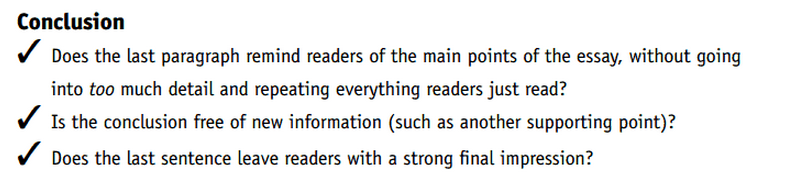
Warm Up: NoRedInk Apostrophe Practice Good morning! Let's continue our apostrophe practice at NoRedInk. Log in and locate the 'Apostrophes # 3' assignment. Remember to fix your mistakes in order to receive full credit. What you don't complete in class becomes homework. You will have an Apostrophe quiz tomorrow. Are you prepared? Write an Argument Essay: The Conclusion Paragraph It's finally time to put your Argument Essay to bed and write the conclusion paragraph. This is your opportunity to make your case one last time, reminding readers of your main points while making a strong final impression. You want to finish with a strong sentence. Looking for an idea? Try referring to your hook, finding a quote, or inspiring your readers. You can also find some argument essay conclusion examples here. If you would like to meet with me today, sign up and make an appointment.
Homework (1.)30 minutes of silent reading at home. Make sure to record your reading on one of the digital reading logs available. Our weekly Google Form reading log is here and the Google Spreadsheet reading log can be found here. (2.) Complete your NoRedInk 'Apostrophe' assignment. You will have an 'Apostrophe' quiz in class tomorrow. Please make sure your are prepared. (3.) Deadline: All assignments related to the Argument Essay (except the essay itself) are due tomorrow, Friday, April 4. Make sure they are in your name folder within your Language Arts folder. You can find a list of the assignments due here. The Argument essay itself will be due on Monday, April 7.
Writing an Argument Essay This day is dedicated entirely to refining the introduction and body paragraphs of your essay (tomorrow we'll start work on the conclusion paragraph). If you need resources, please refer back to the previous days' blog entires. If you need to schedule an appointment to meet with me, please sign up on the white board. You've made it this far, so don't stop now! Make this an essay you can be proud of!
Homework(1.)30 minutes of silent reading at home. Make sure to record your reading on one of the digital reading logs available. Our weekly Google Form reading log is here and the Google Spreadsheet reading log can be found here. (2.) Complete work on the introduction and body paragraphs.
Buster Posey crushed a home run last night to lead the Giants to their first win of the season.
Warm Up Let's continue practicing using 'Apostrophes.' Visit NoRedInk and start the assignment entitled "Apostrophes # 2." If you make a mistake, simply fix your error in order to receive full credit. What's not finished in class becomes homework. We will be having an 'Apostrophe' quiz later in the week, so make sure you're learning by doing. If you still need some help understanding how to use apostrophes check out the site here.
Write an Argument Essay: The Body Paragraphs Now that you've introduced the issues involved and established your point of view (thesis) in the introduction paragraph, it's time to really make your case. In the first body paragraph, clearly present the strongest pieces of evidence that support your thesis, and provide additional details for each to strengthen your argument. Make sure you order your details appropriately and use transition words (which you can still find here) to tie your ideas together.
In your second body paragraph you want to make sure to acknowledge the opposing point of view, but then refute it. Explain using evidence why this line of reasoning is wrong.
Make sure you check the 'Body Paragraphs Checklist' before moving on. If you didn't start your Argument Essay yesterday, you can find the document you will be using to write it here. Homework(1.)30 minutes of silent reading at home. Make sure to record your reading on one of the digital reading logs available. Our weekly Google Form reading log is here and the Google Spreadsheet reading log can be found here. (2.) Complete the NoRedInk Apostrophe assignment. (3.)Work on the body paragraphs of your Argument Essay.